🔊 Audio Wiring Guide
Speaker Cable Gauge: How to Choose the Right AWG
Choosing the right speaker cable gauge keeps your power where it belongs — at the speaker, not lost in the wire. Here’s how speaker wire gauge (AWG) works, a clear chart by power and run length, and how to pick the correct size for home and car audio.
How Speaker Wire Gauge Works
Gauge (AWG) describes wire thickness. Thicker wire = lower resistance, so more of the amplifier’s power reaches the speaker and damping stays tight. Resistance grows with length, so a long run needs a thicker gauge than a short one at the same power. The classic rule: keep the wire’s total resistance below roughly 5% of the speaker’s impedance (e.g. under ~0.4Ω for an 8Ω speaker).
Speaker Cable Gauge Chart
| Gauge (AWG) | Best For | Typical Run |
|---|---|---|
| 18 AWG | Low-power speakers, surrounds | Short (under ~15 ft) |
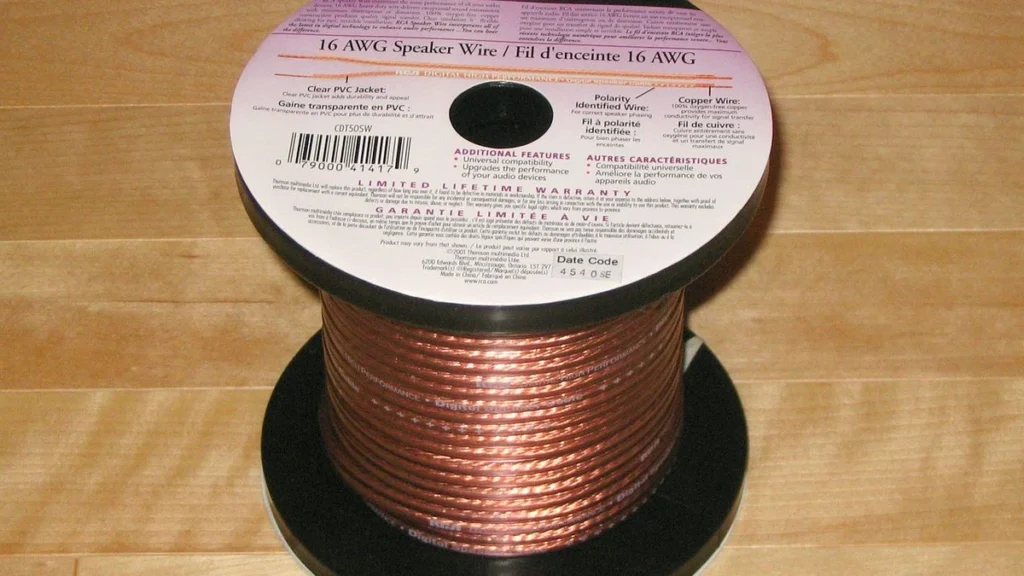
| 16 AWG | Standard home & car speakers | Medium (up to ~25–35 ft) |
| 14 AWG | Higher power or longer runs | Long (up to ~50 ft) |
| 12 AWG | High power, 4Ω loads, subs, long runs | Very long / demanding |
Impedance and Length Both Matter
Copper Quality: OFC vs CCA
✅ OFC (Oxygen-Free Copper)
- Lowest resistance for its gauge
- Carries rated power reliably
- Corrosion resistant & durable
- Best for performance and longevity
⚠️ CCA (Copper-Clad Aluminum)
- Cheaper and lighter
- Higher resistance than pure copper
- Effectively behaves like a thinner gauge
- Acceptable for budget low-power runs
Tips for a Clean, Quiet Install
- Keep both wires in a pair the same length where practical
- Maintain consistent polarity (+/–) across every speaker
- Use quality banana plugs, spades or ferrules for solid contact
- Route speaker cable away from power/AC wiring to avoid noise
- Don’t over-strip — bare strands touching can short the amp
Frequently Asked Questions
What gauge speaker cable should I use?
Does thicker speaker wire sound better?
How does run length affect gauge choice?
Is 16 or 14 gauge better?
Does speaker cable gauge matter for car audio?
Picking the Right Speaker Cable?
Match the gauge to your power, impedance and run length, choose OFC copper, and keep polarity consistent for clean, full-power sound.